
Foldable phones have moved from niche experiment to flagship battleground, and two of the highest-profile entries are the Xiaomi 18 Fold vs the Apple iPhone Duo.
Both launched within weeks of each other, both use a wide “book-style” form factor, and both are aimed at buyers who want a tablet-sized screen that folds into a pocketable phone.
Dimensions and Design
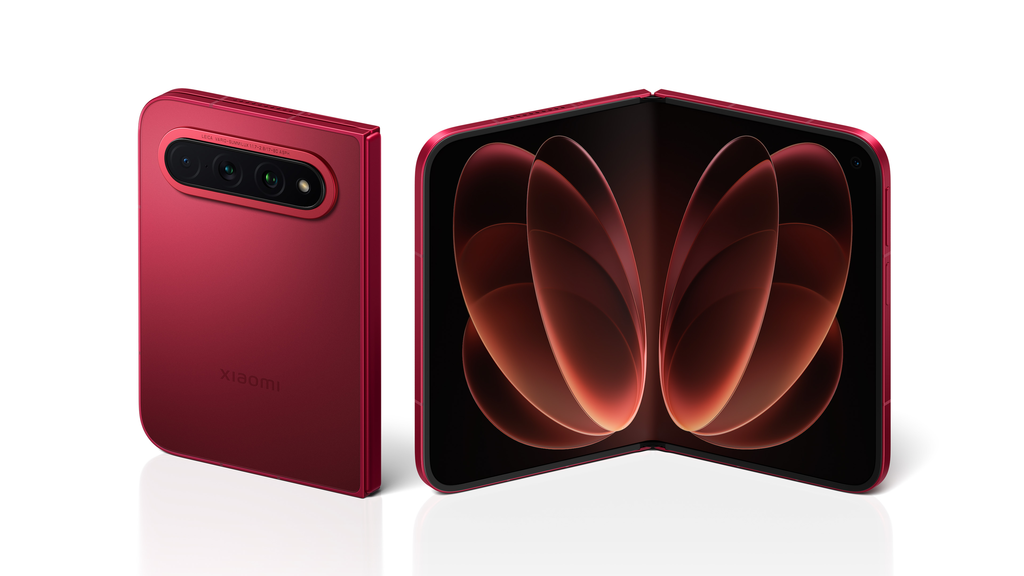
The Xiaomi 18 Fold uses what Xiaomi calls a “mid-fold” design: a wide, passport-shaped body that opens sideways rather than the taller, narrower shape used by book-style foldables from a few years ago.
Xiaomi 18 Fold dimensions:
- Folded: 117.8 x 83.6 x 10.68 mm
- Unfolded: 117.8 x 163.8 x 5.02 mm
- Weight: 219 g
- Hinge: newly engineered multi-link “dragon bone” mechanism
- Build: flat wraparound frame with large-radius elliptical corners, IPX8 water resistance
- Finishes: White, Black, Red, and a limited ultra-light Ceramic Special Edition
Apple iPhone Duo dimensions:
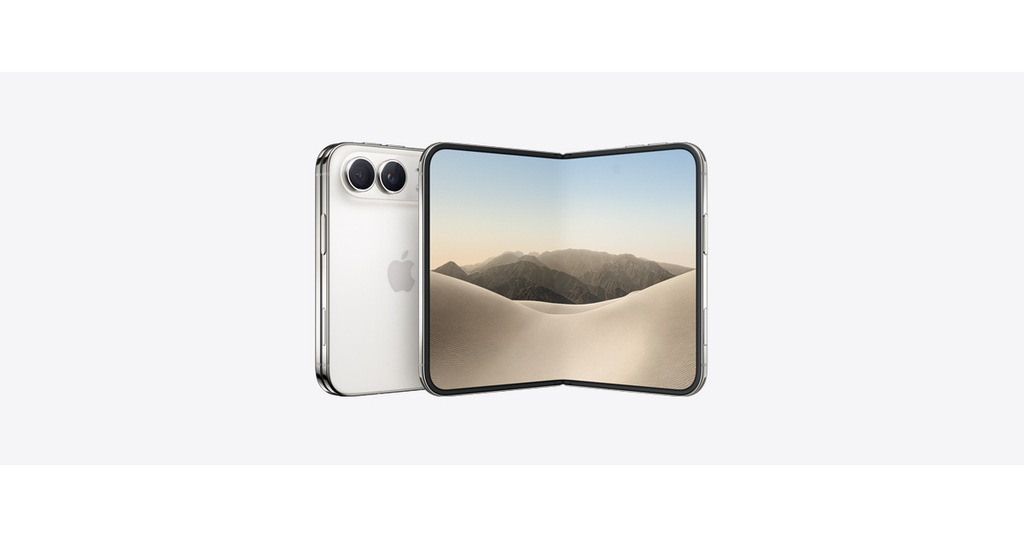
- Folded: 117.8 x 83.6 x roughly 10.6 mm (thickness increases slightly with the camera plateau)
- Unfolded: 117.8 x 164.6 x 5.2 mm
- Weight: 254 g
- Hinge: carbon-fiber-supported mechanism built from over 100 components, with a variable torque profile and magnets that produce an audible click when closed
- Build: grade 5 titanium frame, Ceramic Shield on the back, Ceramic Shield 2 on the front, IP68 rating
- Finishes: Starwhite and Night Sky
Both phones land at nearly identical footprints and both close to roughly the same thickness, but the Xiaomi 18 Fold is about 35 grams lighter.
Xiaomi relies on aluminum/glass construction with an optional ceramic edition, while Apple uses titanium throughout with a dual-layer Ceramic Shield.
The Xiaomi model carries IPX8 splash resistance; the iPhone Duo carries the more comprehensive IP68 rating, which adds certified dust resistance.
Display Specs
Both devices use a dual-screen layout: a smaller cover display for quick tasks and a larger inner display that opens into a tablet-like canvas.
Xiaomi 18 Fold displays:
- Outer: 5.38-inch AMOLED, 1712 x 1168 resolution, up to 120Hz refresh rate, up to 4,000 nits peak brightness, Dragon Crystal Glass 3.0 protection
- Inner: 7.58-inch flexible AMOLED, 2364 x 1672 resolution, LTPO refresh rate from 1–120Hz, up to 4,000 nits peak brightness, UTG (ultra-thin glass) cover with P3 color gamut
Apple iPhone Duo displays:
- Outer: 5.4-inch Super Retina XDR OLED with ProMotion (adaptive refresh) and Always-On support
- Inner: 7.6-inch Super Retina XDR OLED with ProMotion, available with a nano-texture finish option for reduced glare
The two phones are within a fraction of an inch of each other on both the cover and inner screens, and both use adaptive high-refresh-rate OLED panels.
Xiaomi publishes specific brightness (4,000 nits) and resolution figures, while Apple has not published exact resolution or brightness numbers for the iPhone Duo’s panels. Apple’s nano-texture option is aimed specifically at reducing glare and reflections, a feature Xiaomi has not offered on this model.
Camera
Camera hardware is one of the clearest differentiators between the two phones.
Xiaomi 18 Fold camera system (Leica-tuned):
- 200MP main sensor
- 50MP periscope telephoto with 3.5x optical zoom
- 50MP ultrawide
Apple iPhone Duo camera system:
- 48MP Fusion Main (26mm equivalent, f/1.6, sensor-shift optical image stabilization)
- 48MP Fusion Ultra Wide (13mm equivalent, f/2.2, 120° field of view)
- 12MP optical-quality 2x telephoto crop taken from the main sensor (no dedicated telephoto lens)
- 12MP Center Stage front camera on the outer display
- Under-display FaceTime camera on the inner screen, rated for 1080p video
The Xiaomi 18 Fold ships with three physical rear lenses, including a periscope zoom lens with true optical magnification.
The iPhone Duo uses two rear lenses and produces its “2x telephoto” through a high-resolution crop of the main sensor rather than a separate lens. Both phones use a 48MP-class main sensor on paper, though Xiaomi’s is a higher native 200MP unit.
Apple’s iPhone Duo adds folding-specific camera software: Smart Take (automatic hands-free capture), Duo Preview (a live preview shown on the outer screen so the subject can see the framing), and Kid Cue (on-screen animations to hold children’s attention during a shot).
Software Features: Optimizing for Two Display Sizes
A foldable’s software has to work coherently across a small cover screen and a much larger inner display, and both companies have built specific tools for that transition.
Xiaomi 18 Fold (HyperOS 4):
- Continuity features that carry an open app and its state from the outer screen to the inner screen without restarting it
- Multi-window and split-screen support suited to the wider 7.58-inch canvas
- AI-assisted productivity tools that HyperOS 4 introduces across Xiaomi’s larger-screen devices, including the 18 Fold
Apple iPhone Duo (iOS, redesigned for foldables):
- Support for running two apps side by side on the inner display, plus iPad-style sidebars in supported apps
- Duo FaceTime, which lets a person physically next to the user join a FaceTime call using the outer display
- Third-party apps — including Netflix, Zoom, and Slack — have released versions specifically optimized for the iPhone Duo’s dual-screen layout at launch
- The device does not need to be unfolded for basic tasks; the 5.4-inch outer screen handles notifications, quick replies, and camera preview independently
Both platforms are built around the same core idea — letting a single app or task move fluidly between a phone-sized screen and a tablet-sized one — but they approach it differently.
HyperOS 4 leans on Xiaomi’s broader “human x car x home” ecosystem and AI features that scale to larger canvases, while Apple has rebuilt specific iOS interactions (multitasking, sidebars, Center Stage/FaceTime handoff) explicitly around the fold.
App-level optimization from major third-party developers is a notable factor for the iPhone Duo at launch.
Battery
Xiaomi 18 Fold battery:
- 6,000 mAh silicon-carbon dual-layer cell
- 67W wired charging
- 50W wireless charging
Apple iPhone Duo battery:
- Capacity not officially disclosed by Apple
- Rated for up to 31 hours of video playback using the inner display, 44 hours using only the outer display, or roughly 24 hours with mixed use of both screens
- Fast charging supports up to 50% charge in 20 minutes
Battery comparison: Xiaomi publishes a specific cell capacity (6,000 mAh) and two charging speeds. Apple instead publishes usage-hour estimates rather than a raw capacity figure, though third-party leaks prior to launch suggested a cell in the 5,000–5,500 mAh range. Both phones support fast wired charging, though Xiaomi is the only one of the two to also offer wireless charging on this model as specified here.
Price and Availability
Xiaomi 18 Fold pricing (China launch):
- 12GB RAM / 256GB storage: CNY 10,999 (~$1,640)
- Additional configurations up to 16GB RAM / 1TB storage (the only tier with LPDDR6 memory)
- Ceramic Special Edition: CNY 15,999 (~$2,380)
- Available for purchase in China since September 10, 2026; no confirmed global retail launch yet, though import retailers list it with global shipping starting around $1,999–$2,000
Apple iPhone Duo pricing:
- Starts at $1,999 for 256GB, rising to $3,199 for the 2TB configuration
- Announced September 9, 2026, at Apple Park alongside the iPhone 18 Pro and Pro Max
- Pre-orders opened October 16, 2026; general availability began October 23, 2026
- Sold through Apple’s standard retail and carrier channels globally, eSIM-only in some markets
Price comparison: Entry pricing is close once the Xiaomi 18 Fold’s price is converted to USD, though Xiaomi’s official sales channel remains China-only for now, with global buyers relying on importers. The iPhone Duo launched with standard worldwide retail availability through Apple and its carrier partners from day one.
Summary
The Xiaomi 18 Fold and Apple iPhone Duo arrived within days of each other with strikingly similar footprints, screen sizes, and starting prices, but they differ in build materials, camera hardware, charging methods, and how each company has adapted its software for a folding display.
The Xiaomi 18 Fold offers a three-lens Leica camera system, published brightness and resolution figures, and wireless charging, while the iPhone Duo offers a titanium-and-ceramic build, an IP68 rating, and day-one software optimization from major app developers.
Buyers comparing the two on specs alone will find the decision comes down to ecosystem (Android/HyperOS vs. iOS), camera architecture, and regional availability rather than a clear gap in raw hardware.